Tuesday, 17 April 2012

258) HOT N’ SPICY EGG CHUTNEY

HOT N’ SPICY
EGG CHUTNEY

Ingredients:

     1)    Eggs – 7 Nos.
     2)    Coconut oil or other cooking oil – 1½ tablespoon
     3)    Coconut – ½
     4)    Dry hot red chilies – 6 Nos.
     5)    Hot green chilies – 2 Nos.
     6)    Onion – 150 gm.
     7)    Tomato – 150 gm.
     8)    Tender curry leaves – 3 sprigs
     9)    Fennel seeds – ½ teaspoon
     10)     Coriander powder – 2 teaspoons
     11)     Mustard seeds – ½ teaspoon
     12)     Turmeric powder – ½ teaspoon
     13)     Garam masala powder – 2 pinches
     14)     Coriander leaves – of one plant
     15)     Salt – 1½ teaspoons


To Prepare:

          Grate the coconut. Put the coconut and the dry hot red chilies into a food processor. Without adding any water, grind for a minute. Discard the stems of the green chilies. Peel the onion. Chop the green chilies, the onion and the tomato to superfine pieces. Discard the root and the hard stem of the coriander plant and chop finely to pieces. Pluck the tender curry leaves off their sprigs and set aside. Beat the eggs nicely and set aside.


To Cook:

          Set a wide wok on high heat. Pour in the cooking oil and tip in the mustard seeds. As soon as the seeds are about to finish popping, throw in the fennel seeds. Stir thrice and tip in the curry leaves. Stir once and chuck in the chopped green chilies, the onions and the tomatoes. Tip in the salt. Stir continuously.

          As it starts to turn brown, bring down the heat to medium and pour in the beaten eggs. Stir to scramble the eggs. Once the eggs are fully scrambled, tip in the ground coconut paste. Stir briskly and tip in the coriander powder and the turmeric powder. Soon the mixture will become somewhat powdery.

          Now tip in the garam masala powder and the coriander leaves. Stir well and switch off the heat. Your special, spicy egg chutney is ready. Enjoy as a side dish to rice, chappatis, soyyea polos, porridge, cherupayar kanji or as a sandwich filling.

Enjoy!!!


Note:

          The hot and spicy egg chutney in the picture does not contain any coriander leaves since I had run out of stock.

Monday, 16 April 2012

257) JACKFRUIT TEMPURA


JACKFRUIT TEMPURA
A DELICIOUS TEATIME SNACK


Ingredients:

     1)    Fleshy pulp jackets of fully mature unripe jackfruit – 30 Nos. (for cutting tips, see my crispy jackfruit chips recipe)

     2)    Chickpea flour – 300 gm.
     3)    Hot red chili powder – 1 teaspoon
     4)    Asafoetida powder – ¼ teaspoon
     5)    Cumin seeds – ½ teaspoon
     6)    Turmeric powder – ½ teaspoon
     7)    Tender curry leaves – 3 sprigs
     8)    Salt – 1¼ teaspoons
     9)    Any cooking oil – to deep-fry


To prepare the batter:

          Put the chickpea flour, the two chili powders, the asafoetida powder, the turmeric powder and the salt into your food processor or blender. Pour in just enough water and blend to the consistency of pancake batter. Transfer to a bowl and tip in the cumin seeds and the curry leaves (plucked from their sprigs). If the curry leaves are bigger or not too tender, chop them finely before you tip them in.

          Mix in nicely and taste. Add more salt or chili powder if required (see tip at the bottom of this recipe).


To deep-fry:

          If the pulp is larger, cut it lengthwise into two halves. Take care to remove the seed together with the thin skin that covers it. Set a wok on high heat and pour in the cooking oil. Once the oil is hot and just about to smoke, dip the jackfruit flesh in the bowl or batter and roll it around so as to cover it fully. Release the coated flesh one by one gently into the hot oil, taking care not to overcrowd the wok (you do not want the tempuras to stick together).

          Stir gently so as to fry all sides evenly. After two minutes, lower the heat to medium for the jackfruit takes some time to cook nicely within its thick jacket. Stir frequently. As soon as the chickpea flour jacket starts to change colour (becomes slightly brownish), it is time to lift out the jackfruit tempura.

          Drain off all the excess oil and serve fresh and hot with tea or with coffee. Be sure to try this simple snack. You will love it!
Enjoy!!!


Tip:

          Try adding a couple of very finely chopped hot green chilies to the batter for greater flavor and taste

Saturday, 14 April 2012

256) CURRY LEAF CHUTNEY


CURRY LEAF CHUTNEY
THE MOST DELICIOUS AND APPETIZING
OF ALL CHUTNEYS

Ingredients:

     1)    Fresh curry leaves pulled off their sprigs – 200 gm.
     2)    Big coconuts, preferably aged with very little water inside OR full copra (‘Khurdi’ in Konkani, ‘Boda’ in Malayalam) OR a mix of both – 3 Nos.
Full Copra
     3)    Dry hot red chilies – 20 Nos.
     4)    Tamarind – an olive sized bit
     5)    Salt – 1½ teaspoon

To Make:

          If you are using coconuts, grate them. If you are using copra, chop finely.  Set a thick cast iron or nonstick wok (cast iron is better for health and for taste) on high heat. Tip in the grated coconut (or the finely chopped copra), the red chilies (after discarding their stems), the tamarind and the salt. Stir gently and continuously till the coconut turns slightly brown. Turn down the heat and continue to stir until the coconut becomes a light brown in colour.

          Tip in the curry leaves and stir frequently (still on low heat) till the coconut turns a dark brown. Take care not to let the mixture burn at the base at any time. Switch off the heat and continue to stir for 3 minutes to disperse safely, the residual heat of the wok. Set aside to cool.

          Take care not to sprinkle a single droplet of water even by accident since this chutney needs to be absolutely dry as it has a very high keeping quality (up to 6 months). You must ensure that the jar of your food processor is absolutely clean and dry (preferably sun-dried for an hour). Once the roasted mixture has cooled fully, grind it to fine paste. You will notice that beautiful, fragrant coconut oil is oozing out of the chutney.

          Use a clean dry spoon to transfer the chutney to a clean, sun-dried, airtight glass jar. Keep tightly closed once the chutney is cool. Serve this super-delicious curry leaf chutney in small helpings and enjoy with idlis, dosas, pathiris, soyyea polos, porridge, cherupayar kanji or with any rice dish.

Bon appétit!!!

Friday, 13 April 2012

255) CRISPY JACKFRUIT CHIPS


CRISPY JACKFRUIT CHIPS

Chips of a gumless jackfruit

Ingredients:

     1)    Fully mature unripe jackfruit – 1 no.
     2)    Coconut oil or other cooking oil – to deep fry
     3)    Powdered salt – 1 tablespoon


To cut the jackfruit:

          Select a strong sharp knife for cutting the jackfruit to pieces. Spread some old newspaper on your kitchen table. Cut 2 or 3 sheets of newspaper to notebook sized pieces. Spread a couple of sheets of newspaper on a platter or a wide basin to put the waste in. Pour a tablespoon of coconut oil or cooking oil into a small bowl. Dip your fingers and grease the blade of the knife. Grease your palms and fingers too by rubbing in the oil. This is necessary since the gum of the jackfruit is quite sticky and often copious (except in the gumless jackfruit which I have shown in the pictures).

          Put the jackfruit on the table and hack strongly across the middle. If it is not fully cut, put your weight on the knife, pushing it to and fro till the fruit is cut to halves. Now you can see the white gum running out from the core of the jackfruit. Quickly crumple up a piece of newspaper and mop it up. Discard the soaked newspaper and use another, repeating 3 or 4 times till the flow lessens.

          Now cut each half lengthwise into halves, quarters and then into one-eighths. You will get 15 triangular slices. Wipe off the gum oozing out of the cut core portions. Grease your fingers with oil again. Now carefully slice off and discard the core portions, exposing the top of each cream coloured, pulp coated seed.

          Pry out each seed from the mass of whitish nylon-like strands which are in fact, unpollinated and consequently undeveloped seeds which happen to be inedible. Once all the seeds with their pulpy jackets are out, clear the table and discard the waste. Rub a bit more oil on your fingers, if they are sticky with gum. Wipe off the oil with a piece of newspaper and wash your hands with soap and water. Get some rest and refreshments before you start working on the seeds.

***

          Use a small knife to make a slit lengthwise around the pulp jacket. Split it open to remove the seed together with its thin outermost skin. Set aside the pulp jackets for making the chips.

          
          Remove the thin outer skin from the seed and set aside for later use. Several delicious and nutritious dishes can be prepared using jackfruit seeds.

          Now cut the pulp lengthwise into juliennes of around 4 to 5 mm. thickness.


To deep-fry:

          Use a wide, deep and thick cast iron wok to deep-fry the chips. Pour in the cooking oil till the wok is a bit more than half full. Set on high heat. Tip the salt into a small bowl and pour in around 100 ml. of water. Stir with a teaspoon till the salt is dissolved to the maximum and set aside.

          As soon as the oil is hot and just about to smoke, tip in a handful or two (depending on the size of your wok and the quantity of oil) of jackfruit juliennes. Stir occasionally. If they froth too much, there is danger of the oil spilling over and caching fire (some roasted coconut oils have this problem). So if the froth is heavy, just use a stainless steel wire sieve to lift up the juliennes for a few seconds till the froth lessens and then dip them back in.

          Stir occasionally to fry all the chips evenly. When the chips are almost done but before they turn brown, the bubbles in the oil will be considerably lesser. Now is the time to tip in a teaspoonful of brine (salt solution). As the oil starts to roar, remember to stir frequently so that the salt may deposit itself uniformly onto the chips.

          Once the roaring stops and the bubbles become lesser, you can see the chips starting to turn golden brown. Turn down the heat and sue the sieve to lift out the chips. Drain off the excess oil and set aside in a dry stainless steel container. Now tip in the next batch, turn up the heat and continue till all the chips are done.

          Keep the container open on the table till the chips cool down to room temperature. Cover tightly with a lid for keeping crisp while in storage. Enjoy as a snack. The crispy jackfruit chips are so tasty that you will find the tin empty in no time.

Enjoy!!!

Chips of a regular jackfruit
Notes:

     1)    Cast iron woks, being thicker, are safer than stainless steel or aluminum woks and the oil is far less likely to catch fire than while using the latter.

     2)    Any type of jackfruit, either ‘pazham’ or ‘varikka’ can be used to make the chips. It is important that a) the jackfruit is fully mature, but unripe and b) the jackfruit is collected before the advent of the rainy season. During the rains, the jackfruit pulp tends to absorb a lot of water and lacks taste. It also absorbs a lot of cooking oil. If by mistake, you get such a rainy season jackfruit, do not fret, for you can simply salt the pulp and keep for a year or more to make out of the season, delicious, salted jackfruit upkari. Do you want the recipe?

     3)    Adjust the quantity of brine to get your desired saltiness. The first batch needs a bit more but the later batches need less since some salt lingers in the oil.

Tuesday, 3 April 2012

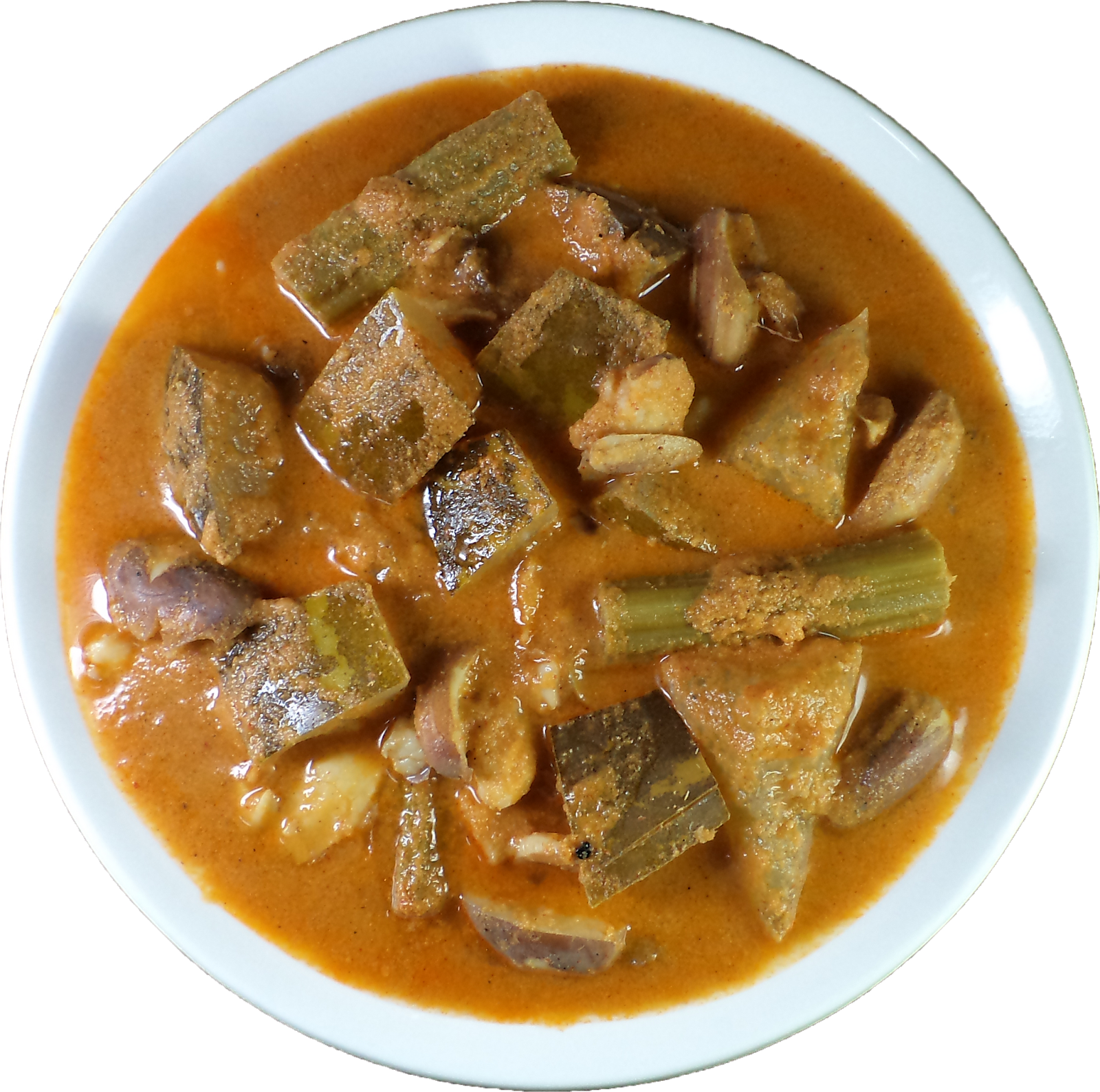
254) MOGGYA KOJAL


MOGGYA KOJAL
A SUPER DELICIOUS KONKANI CUCUMBER-JACKFRUIT SEED-DRUMSTICK CURRY


Ingredients:

     1)    Kerala curry cucumber (‘Moggé’ in Konkani, ‘Vellari’ in Malayalam) – 1 kg.

     2)    Jackfruit seeds – 30 Nos.


     3)    Drumsticks – 3 Nos.
     4)    Garlic – 1 pod
     5)    Medium sized coconut – 1 no.
     6)    Dry Kashmiri chilies – 10 Nos.
     7)    Dry hot red chilies – 5 Nos.
     8)    Tamarind – a small olive sized bit
     9)    Coconut oil – 1 tablespoon
     10)     Salt – 1½ teaspoons

To Cook:

          Remove the whitish nylon-like outer skin of the jackfruit seeds and carefully cut each seed lengthwise into 2 halves. Wash the drumsticks and cut into pieces of around 3 inches in length. Wash the curry cucumber and cut lengthwise into quarters. Cut off and discard the seed core. Cut each quarter into thick chunks (the size can vary).

          Do not peel the cucumber since the skin contains plenty of vitamins necessary for nourishing your skin. It is also very tasty and gives the curry the full flavor of the cucumber.

          Grate the coconut. Break both types of red chilies into halves (this is to prevent them from bursting when they hit the hot oil). Set a small pan on low heat. Pour in a teaspoon of coconut oil and throw in the chilies. Stir roast them for a minute and switch off the heat.

          Put the grated coconut, the roasted chilies and the tamarind into a food processor. Pour in a glass of water and grind to superfine paste (the smoother the paste, the tastier will be the curry). Separate the garlic cloves and crush lightly (this is to prevent them from bursting during the frying process and also to enhance the flavor).

          Put the cucumber pieces, the jackfruit seeds and the drumstick pieces into a curry vessel. Pour in enough water to immerse the vegetables fully. Tip in the salt and set on high heat. As soon as it starts to boil, turn down the heat and cover with a lid. Let the veggies cook slowly. Five minutes later, open the lid and check to see if the vegetables are half cooked.

          You can ascertain this by pressing the jackfruit seeds (the hardest of the three) with the tip of a knife. If the seeds are somewhat soft, tip in the ground coconut paste and stir gently. If the curry is too thick, pour in a bit more water and bring it to a pourable consistency.

          Turn up the heat. Once it comes to a boil, turn down the heat and cover with a lid. Every few minutes, check to see if the vegetables are fully cooked. If done, taste and add more salt if required. Switch off the heat.

          Set a small pan on low heat. Pour in the rest of the coconut oil. Tip in the crushed garlic and stir till it turns fully brown. Switch off the heat and tip over the contents into the curry.

          Your ultra-delicious moggya kojal is ready to enjoy. Serve either hot or cold with a heap of soft parboiled rice or just sup it in a bowl. This is a must-be-tried recipe during the jackfruit season which will leave you craving for moggya kojal every day!

Enjoy!!!
Note:

          This is the standard taste. If you like your curry milder, either reduce the number of dry, hot red chilies or avoid them altogether. The traditional recipe does not contain any dry Kashmiri chilies but has more dry hot red chilies and is consequently hotter.

Sunday, 1 April 2012

253) FRIED BEETLES (VEG)


FRIED BEETLES (VEG)
CRISPY DEEP-FRIED JACKFRUIT SEEDS


Introduction:

          There is a story behind how jackfruit seeds became beetles. My daughter loves to take goodies for lunch to school. Though she shares them with her friends, some of the bullies in her class often grab everything, leaving her with an empty lunchbox.

          This remarkable incident happened when she was just 6 years old. That day, I had deep-fried some lovely jackfruit seeds to my daughter’s delight. As usual, she took some to school. As soon as she opened her lunchbox, the bullies ran to her and demanded to know what the unfamiliar things were. She replied spontaneously in Malayalam. “They are ‘vandu pori’” which translates to ‘deep-fried beetles’.

          With horrified looks on their faces, the bullies ran back faster than they had come, leaving my daughter and her friends to enjoy the ‘beetles’ in peace. Ever since, we have been calling deep-fried jackfruit seeds ‘vandu pori’ or ‘fried beetles’.

          Jackfruit seeds are highly nutritious, being full of protein and are even used to manufacture baby food. I am sure you too will enjoy these delicious ‘beetles’. Kids just love them.

Ingredients:

     1)    Fully mature jackfruit seeds – 450 gm.
     2)    Hot red chili powder – 1 teaspoon
     3)    Kashmiri chili powder – 1 teaspoon
     4)    Asafoetida powder – ¼ teaspoon
     5)    Rice powder – 1 tablespoon
     6)    Powdered salt – 2 teaspoons
     7)    Any cooking oil – to deep-fry

To Cook:

          Use a heavy, sharp knife to carefully cut each jackfruit seeds lengthwise into halves. The seeds are quite hard and the outer skin is smooth and stiff like tough nylon. So, it is better to dry the seeds for a couple of days in the shade for the outer skin to dry up. Great care should be exercised in cutting the seeds since there is the ever-present danger of the knife slipping onto your fingers. Once all the seeds have been cut, pluck off and discard the inedible thin, white outer skin, leaving the red inner skin intact (the red skin is rich in vitamins).

          Put the cut seeds into a vessel or a pan and pour in enough water to fully immerse the seeds. Tip in a teaspoon of salt and set on high heat. As soon as it comes to a boil, lower the heat. If you want the fried seeds to be tough and crispy (as shown in the picture), switch off the heat and drain off the stock. If you want the fried seeds to be soft in the inside and crisp on the outside, continue to cook on low heat for 3 to 5 minutes.

          Take out a seed and squeeze to see if it has reached the desired softness. Drain off the stock. Tip in the remaining salt (1 teaspoon), the two chili powders and the asafoetida powder and mix nicely with your fingers. If the seeds feel too dry to the touch, sprinkle a few drops of water and then sprinkle the rice powder. Mix again thoroughly.

          Set a wok on high heat. Pour in the cooking oil. As soon as the oil is hot, gently put in a handful or two of the seeds depending upon the size of the wok and the quantity of the oil. Stir gently and fry till the seeds feel crispy as they touch the ladle. Lift out and drain off the excess oil. Your fried beetles are ready to eat.

Enjoy hot or cold either as a side dish to rice or as a snack.

Bon appétit!!!

Note:

          Children and people with strong teeth generally like their ‘beetles’ tough and crispy whereas elderly people and persons with weak teeth love the soft version. Both are equally delicious.

252) KADALA CURRY


KADALA CURRY
KERALA’S FAVORITE
BROWN CHICKPEA CURRY

Ingredients:

     1)    Kadala (dried brown chickpeas) – 200 gm.
     2)    Raw Nendran banana – 1 no.
     3)    Onion – 200 gm.
     4)    Ginger – 1 inch piece
     5)    Coriander leaves – of 1 plant
     6)    Small coconut – 1 no.
     7)    Dry hot red chilies – 10 Nos.
     8)    Black pepper corns – 1 teaspoon
     9)    Fennel seeds – 2 teaspoons
     10)     Cinnamon stick – 1 inch piece
     11)     Clover – 6 Nos.
     12)     Star anise – 1 no.
     13)     Coriander seeds – 1 tablespoon
     14)     Kudampuli or tamarind (see note no.2) – 15 gm.
     15)     Coconut oil – 1 tablespoon]
     16)     Mustard seeds – ½ teaspoon
     17)     Curry leaves – 2 sprigs
     18)     Turmeric powder – ½ teaspoon
     19)     Salt – 1½ teaspoons

To Cook:

          Soak the chickpeas in water overnight. Peel the onion and the ginger and chop to fine pieces. Discard the root and the hard stem of the coriander plant. Wash and chop to fine pieces. Grate the coconut. Set a cast iron wok on high heat.

          Tip in the grated coconut, the coriander seeds, 8 of the dry hot red chilies (save the other 2 for later), the black pepper corns, the fennel seeds, the cinnamon stick, the cloves and the star anise. Stir frequently taking care not to burn at the base.

          As the coconut starts to brown, turn down the heat and continue to stir till the grated coconut turns a dark brown (without charring even a little bit). Switch off the heat and continue to stir for a minute to keep the base from burning due to the residual heat of the cast iron wok.

          When cool, transfer to a food processor. If you are using tamarind, tip it in now. Pour in just enough water to grind it to superfine paste and set aside.

          Now wash and drain the soaked chickpeas. Transfer them to a 2 litre pressure cooker. Pour in enough water to immerse them fully, an inch deep. Close the lid and set on high heat. Scrape off a very thin peel from the outer skin of the banana and chop the banana roughly to chunks.

          As soon as you hear the cooker give out the second whistle, switch off the heat and let cool naturally. Once the cooker is cool enough to open, check to see whether the chickpeas are cooked (their skins will spilt open when cooked. You can take out one and squeeze with your thumb and forefinger to satisfy yourself that they are cooked. If not, cook for a bit longer. Newly harvested chickpeas puff up more when soaked as well as taste better and cook faster than those that have been stored for a long time).

          Transfer the chickpeas to a saucepan or a curry vessel together with their stock and set on high heat. Tip in the banana chunks, the chopped onion, the ginger, the salt and the turmeric powder. If the stock is less, pour in enough water to immerse the chunks.

          As soon as it comes to a boil, turn down the heat and cook till the Nendran banana turns soft. This may take around 5 minutes or so. Push in the tip of a knife into the banana to determine if it is done. If the knife goes in smoothly without much resistance, it is perfectly cooked. Now chuck in the curry paste and mix nicely.

          If the curry is too thick, add a bit more water and stir. Turn up the heat and let the curry come to a boil. If you are using kudampuli, now is the time to tip it in. Taste and add more salt if required. Sprinkle the chopped coriander leaves and switch off the heat. Cover with a lid.

          Set a small pan on low heat. Pour in the coconut oil and tip in the mustard seeds. As soon as the mustard seeds are about to finish spluttering, break each of the two red chilies into 2 or 3 pieces and tip them in. quickly pull the curry leaves off their sprigs and tip them in too. Stir once and switch off the heat.

          Transfer the entire contents of the pan into the curry. Stir well. Your delicious kadala curry is ready to serve. Serve hot with putte, vellappams, pathiris, porottas, idiyappams, chappatis, puris or with freshly baked bread.

Enjoy!!!

Notes:

     1)    If raw Nendran banana is not available, you can use either elephant foot yam or potatoes.

     2)    If kudampuli or tamarind are not available, just use a couple of ripe, sour tomatoes. Chop and tip them in at the time you chuck in the curry paste.

     3)    You can also use this curry paste to make excellent meat curry, shark curry, mussel curry, crab curry, egg curry, mushroom curry or soy chunks curry.

Follow us by Email and never miss a new recipe!